
What Massachusetts Bans From The Trash
We connect you with independent Western Mass junk haulers. We are not a hauler.
Massachusetts bans eighteen categories of material from disposal. Not discourages. Bans. The rule is 310 CMR 19.017, it applies at landfills, transfer stations and waste to energy plants, and most people living here have never heard of it.
That is not really their fault. The bans came in over more than thirty years, one or two at a time, and nobody sends a letter. The most recent additions landed on 1 November 2022 and they are the two that catch people out most: mattresses and textiles.
The full list, with dates
The bans hit disposal facilities first and transfer stations later, which is why some materials have two dates attached. What follows is the material and the date it became illegal to landfill or burn.
- Lead acid batteries, 31 December 1990
- Leaves, 31 December 1991
- Whole tires, 31 December 1991, and they must be shredded before any landfill disposal
- White goods, meaning large appliances, 31 December 1991
- Yard waste, 31 December 1992
- Aluminum containers, 31 December 1992
- Metal and glass containers, 31 December 1992
- Single polymer plastics, 31 December 1994
- Recyclable paper, including cardboard, 31 December 1994
- Cathode ray tubes, meaning tube televisions and monitors, 1 April 2000
- Asphalt pavement, brick and concrete, 1 July 2006
- Metal, 1 July 2006
- Wood from construction and demolition, 1 July 2006
- Clean gypsum wallboard, 1 July 2011
- Commercial organic material over one ton a week, 1 October 2014
- Commercial organic material over half a ton a week, 1 November 2022
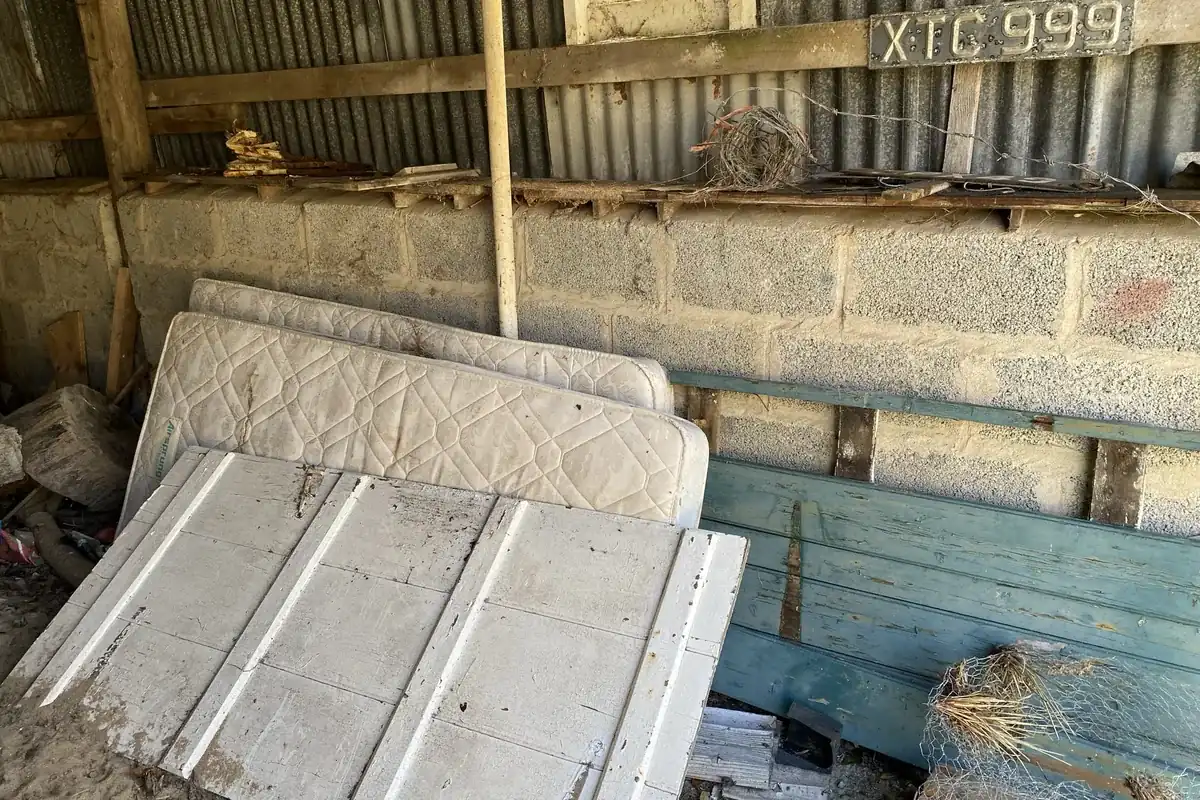
- Mattresses and box springs, 1 November 2022
- Textiles, 1 November 2022
Most transfer facilities were brought under the same restrictions on 1 April 2000 for the earlier materials, and on the listed date for everything from 2006 onward.
The two that surprise people
Mattresses and textiles both became illegal to throw away on 1 November 2022, and between them they cover a very large share of what leaves an ordinary house.
The definitions in 310 CMR 19.006 are broad. A mattress is any resilient material enclosed by ticking that is intended for sleeping upon, at any size. Textiles are clothing, footwear, bedding, towels, curtains, fabric and similar products. So a bag of old clothes is not trash in Massachusetts. Neither is a set of curtains, a duvet or a pair of shoes.
The exemptions, which are narrower than people hope
Mattresses and textiles contaminated with mold, bodily fluids, insects, oil or hazardous substances are exempt and can still be disposed of. That is a genuine exemption and it covers the mattress that came out of a flooded basement.
The mattress ban also excludes mattress pads, mattress toppers, pillows, waterbeds, air mattresses and futon mattresses. Those are ordinary trash. There is no small mattress exception, though. A crib mattress is covered the same as a king.
The distinction almost every website gets wrong
Several of these are landfill restrictions rather than blanket disposal bans. Wood is the clearest case. Construction wood cannot be landfilled, but it may still go to a municipal waste combustion facility.
That matters when you are comparing what two haulers tell you. A page stating flatly that wood cannot be disposed of at all is overstating the rule, and somebody quoting you on that basis has either not read it or is relying on you not having.
Who is actually responsible
Both of you. MassDEP guidance is explicit that the generator and the transporter are each responsible for waste ban compliance. You are the generator. Hiring somebody does not entirely transfer the problem.
In practice this is enforced at the gate. Transfer stations run load inspections, and a mixed load with banned material buried in it gets rejected or surcharged. That cost lands on somebody, which is the actual reason a proper hauler charges more than a man with a pickup.
What it means when you clear a house
An ordinary household clearance in Massachusetts touches six or seven of these categories at once. The mattress from the spare room. The bags of clothes. The tube television nobody has switched on since 2009. The second refrigerator in the basement. The bed frame, which is metal. Boxes of paper. Half a deck's worth of lumber behind the garage.
None of that can be tipped as one load. It has to be separated and taken to different places, which is slower and costs more than one trip to a transfer station. That is the whole explanation for why junk removal is priced the way it is here, and it is worth knowing before you compare two quotes.
What to do with each of the common ones
- Mattresses go to a mattress recycler. Over 75 percent of one is recoverable as steel, foam, wood and fiber. Some towns run a free or subsidized collection, so check yours first
- Textiles go to donation or textile recycling. Textile recycling accepts worn and stained items that a charity would refuse, which is most of what comes out of a long lived in house
- Appliances go to a scrap yard, after a certified technician recovers any refrigerant, which is a separate federal requirement
- Tube televisions and monitors go to a certified electronics processor. A single CRT holds around four pounds of leaded glass
- Metal goes to a scrap yard, and because the yard pays for it, metal lowers the price of a load rather than raising it
- Yard waste goes to composting or chipping
- Construction wood, brick, concrete and wallboard go to a construction and demolition processing facility
What is not on this list, and still cannot go
Household hazardous waste is governed separately and no hauler will take it. Paint, motor oil, antifreeze, solvents, pesticides, pool chemicals and propane cylinders all go to your town's hazardous waste collection day, which most towns in this region run once or twice a year.
Asbestos is a separate licensed trade entirely. In a region where most of the housing predates 1978, it turns up in pipe insulation, floor tile and the mastic under it, textured ceilings and older siding. Nobody without a license should be disturbing any of it, and a hauler who sees it and stops is doing the right thing.
This is a plain summary of a regulation, not legal advice. The controlling text is 310 CMR 19.017 and the definitions are at 310 CMR 19.006, both published by the Commonwealth.
Get a free quote from a local junk hauler
Tell us what needs to go. We pass it to one independent hauler who works your town, and they give you a price. No fee, no contract, and nobody else gets your number.
Call Now(413) 505-8565We connect you with independent Western Mass junk haulers. We are not a hauler.